

SEO in the Era of AI and LLMs: Our Strategy


How Nation Media Design Is Adapting SEO for AI and LLM Search
Search is evolving—fast. AI-first interfaces like ChatGPT, Perplexity, and Google’s AI Overviews now serve answers before users even reach a website. In this new paradigm, traditional SEO signals like backlinks and keyword density aren’t enough. Large Language Models (LLMs) are reshaping visibility and redefining how your content gets discovered. At Nation Media Design, we’ve been on the frontlines of this shift. The rules are changing, and while no one has a complete roadmap, one thing is clear: structured, authoritative, and concept-driven content performs better in this new environment. Here's how we’re adapting our SEO strategy for AI and LLM search—and how you can, too.Why Search Changed
AI interfaces increasingly resolve queries without requiring a click. For businesses, this means fewer opportunities for traffic unless your content is part of the answer. Tools like ChatGPT are now responsible for a growing share of referral traffic. We've observed examples across industries where AI platforms drive meaningful growth, replacing traditional search as a top acquisition channel. However, not all AI exposure is equal. Google's AI Overviews, for instance, may reduce click-through rates by over 30%. This demands a new approach: optimize not just for ranking, but for retrieval and reference.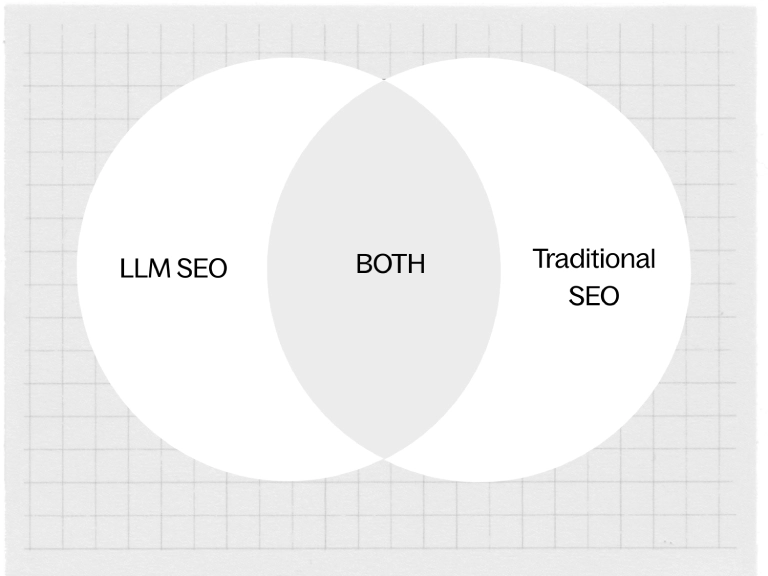
Balancing Traditional and AI-Focused SEO
Classic SEO isn’t dead—it’s foundational. But LLM SEO requires a deeper, more nuanced approach: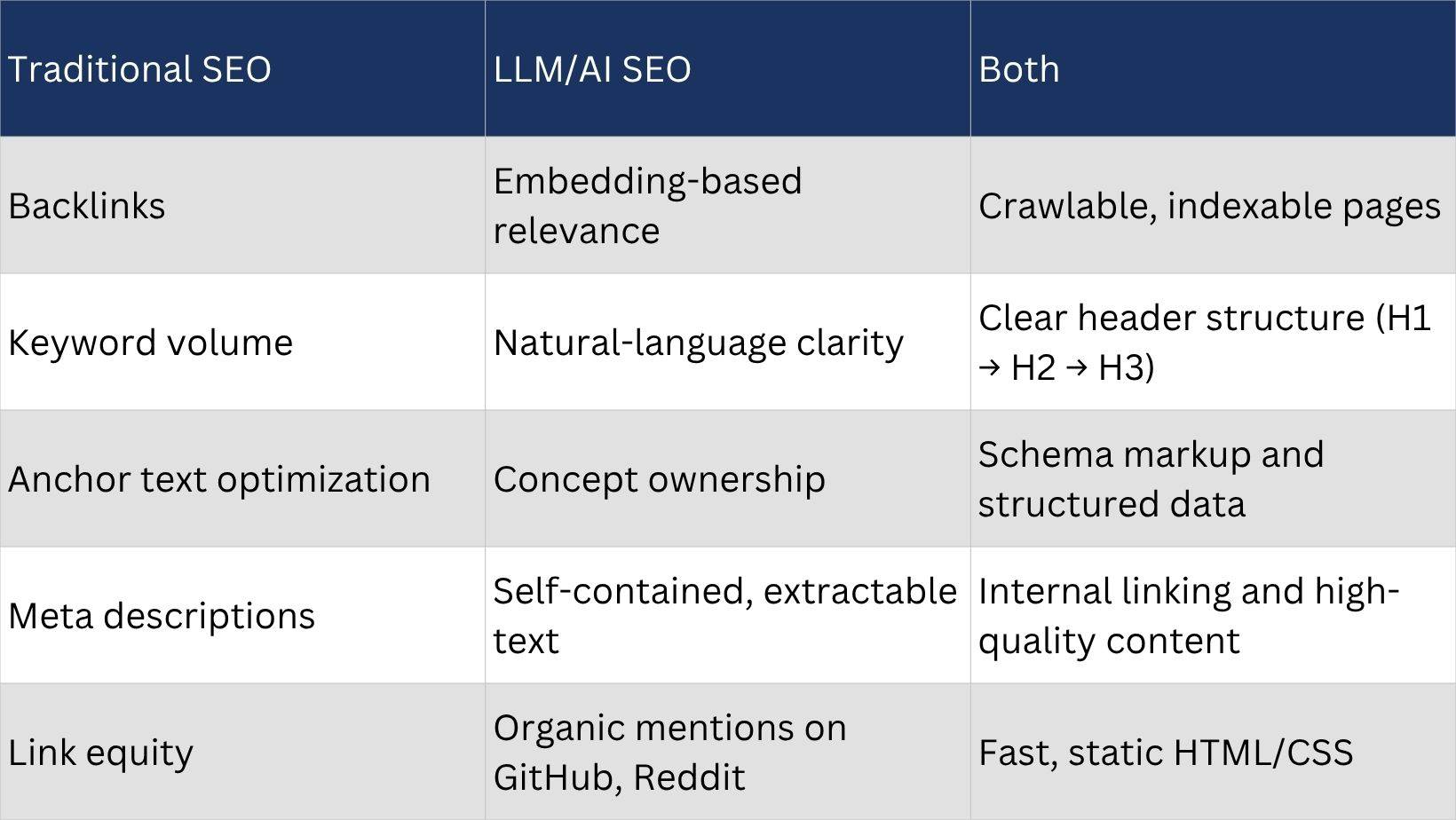 The takeaway? Don’t chase keyword stuffing. Create well-structured, insightful content that can be surfaced both in AI responses and on traditional SERPs.
How LLMs Process Content
Modern LLMs like ChatGPT use Retrieval-Augmented Generation (RAG) to pull live, relevant data based on semantic meaning—not exact keyword matches. For visibility, your content must be:- Crawlable (no JS reliance for key elements)
- Structured with consistent headings
- Enriched with Schema.org markup
- Rendered via SSR or SSG for indexability
Key Tactics for LLM Visibility
1. Own a Frontier Concept
Find topics where your voice can be first or definitive. Monitor emerging trends on Reddit, X, LinkedIn, and GitHub. Look for underserved queries aligned with your brand's expertise.2. Publish the Authoritative Source
Depth wins. Add value through original research, expert commentary, proprietary data, and visual aids. Ensure every article answers more than it asks.3. Structure for AI Comprehension
Use semantic HTML, clear heading hierarchies, and schema markup. Avoid JavaScript-heavy pages unless you're using server-side rendering or static generation.4. Build Organic Citations
LLMs learn from community signals. Be present on forums, open-source projects, and industry discussions. Organic backlinks and mentions help train the next generation of AI.5. Refresh Content Regularly
AI systems favor fresh content. Update high-performing posts quarterly, prune outdated ones, and continuously optimize based on analytics and AI referrer data.Tracking the Impact
While AI visibility metrics are still limited, you can track:- Referrer traffic from chat.openai.com, Perplexity.ai, bard.google.com, etc.
- Source attributions in AI summaries
- Mentions in forums, social, and community sites
- Indexing and performance in Google and Bing Webmaster Tools
Final Thought
SEO is no longer just about ranking—it’s about answer shaping. You must create content that humans trust and AI can extract. At Nation Media Design, we’re helping clients future-proof their SEO strategies to win in both traditional and AI-powered search. It’s not about choosing one or the other. It’s about building visibility across both human and machine audiences. Ready to evolve your SEO approach? Let’s talk. Contact us for an AI-optimized strategy session.AI interfaces increasingly answer queries without a click, and Google's AI Overviews may reduce click-through rates by over 30%, so content must be retrieved and referenced, not just ranked.
Classic SEO isn't dead; it's foundational. LLM visibility builds on it, so create well-structured, insightful content that can surface in AI responses and traditional search results alike.
Use semantic HTML, consistent heading hierarchies, and Schema.org markup. Keep key elements crawlable without relying on JavaScript, or render pages with server-side rendering or static generation.
AI systems favor fresh content, so update high-performing posts quarterly, prune outdated ones, and keep optimizing based on analytics and AI referrer data.
Track referral traffic from sources like chat.openai.com and Perplexity, source attributions in AI summaries, community mentions, and indexing performance in Google and Bing Webmaster Tools.